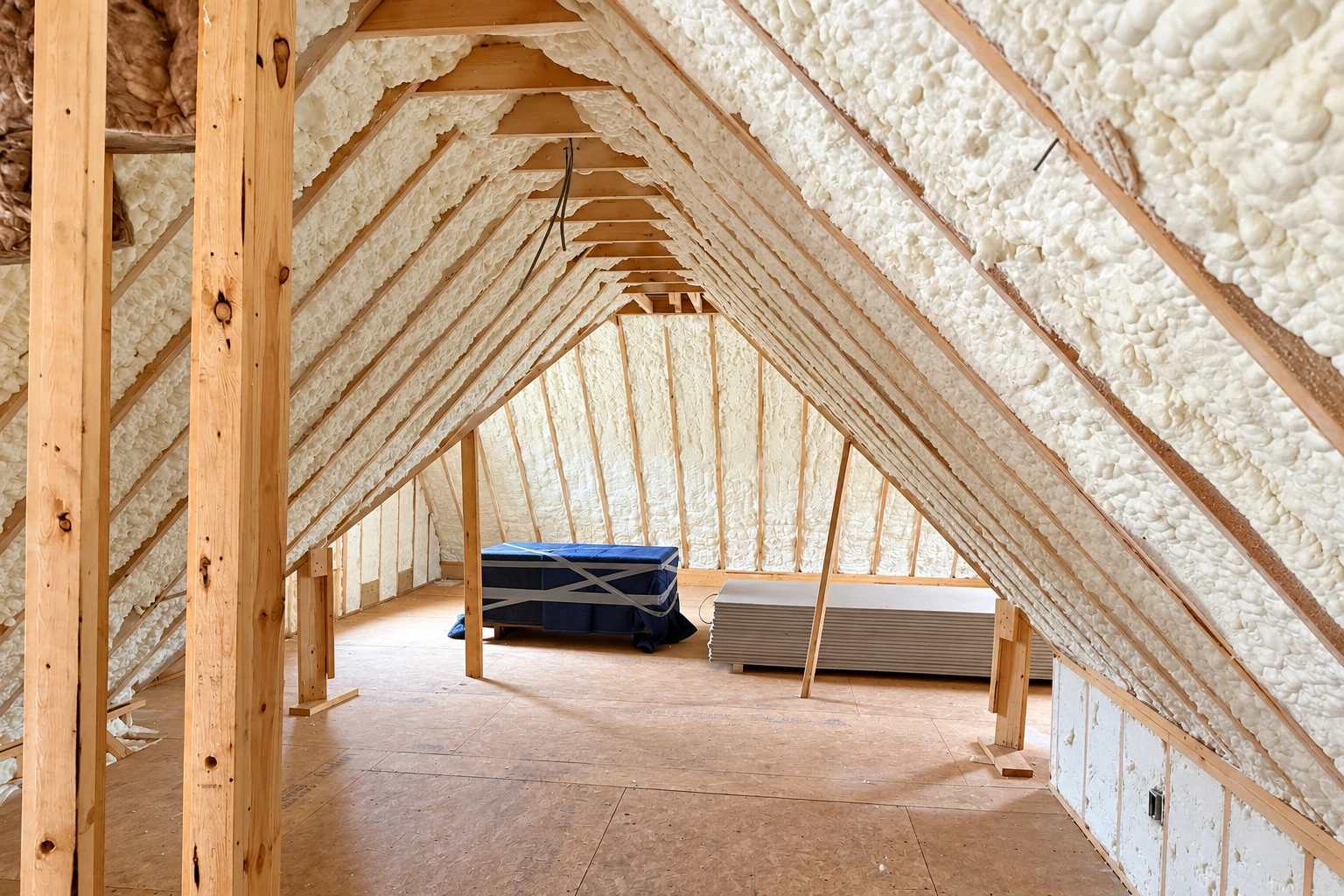
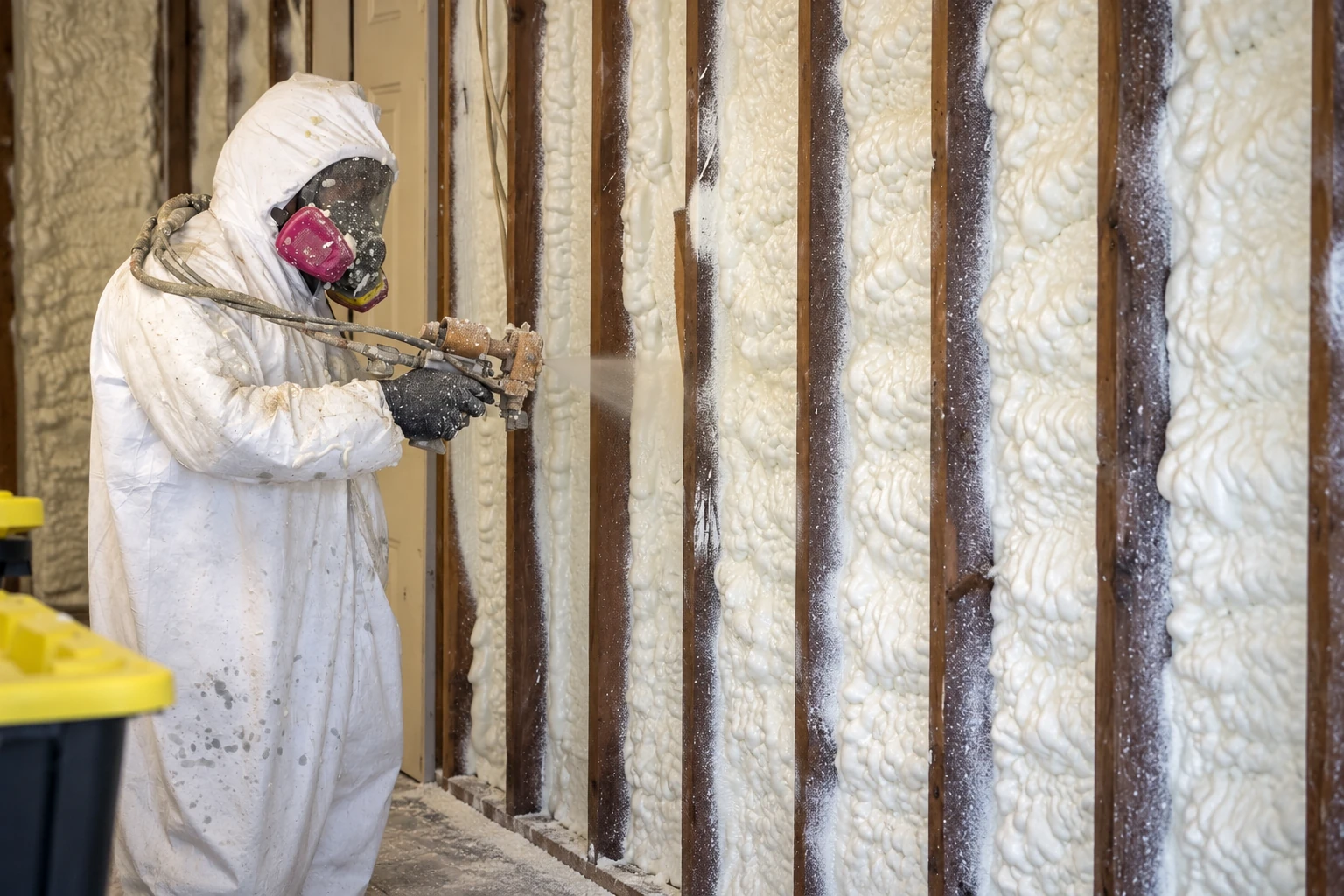
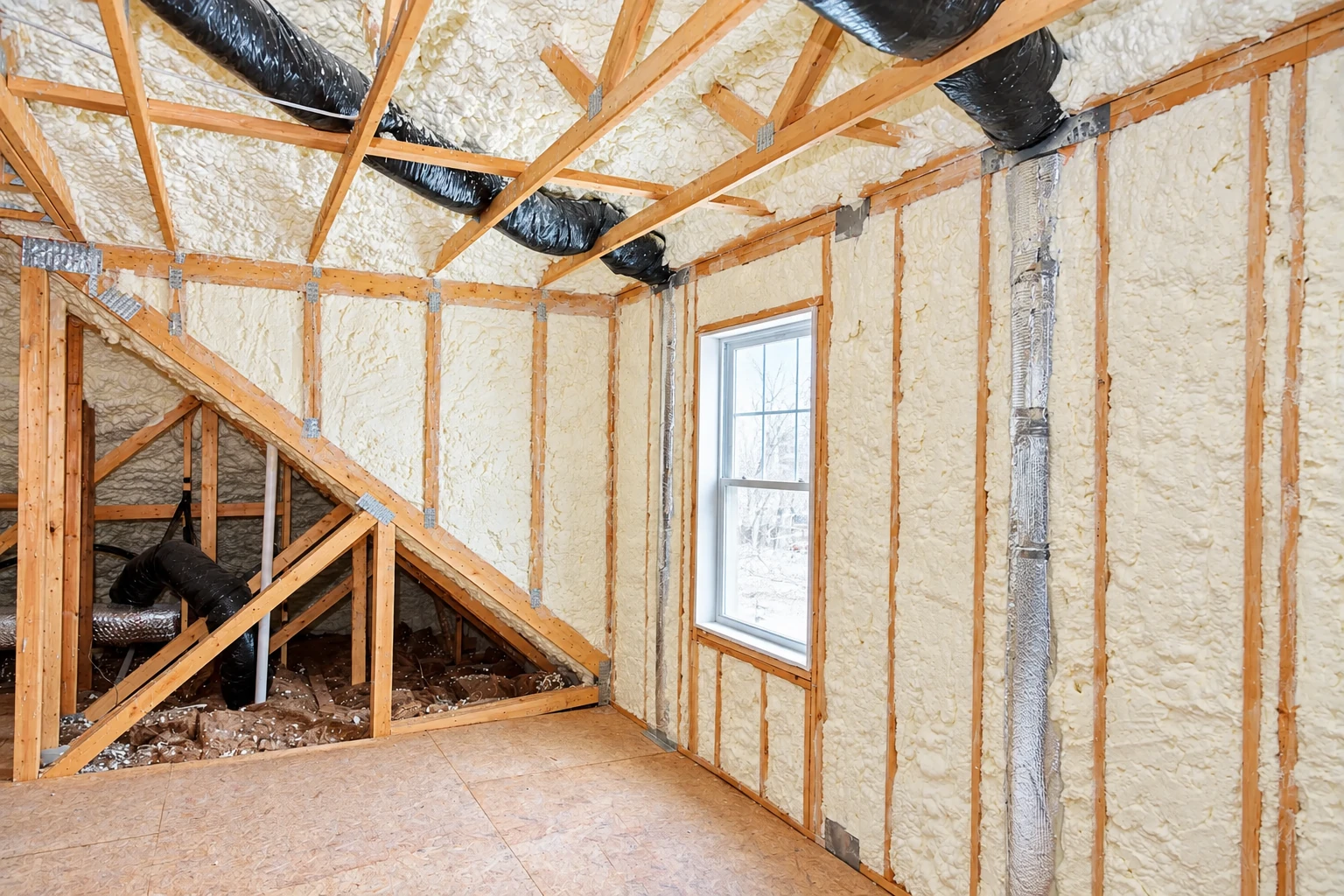
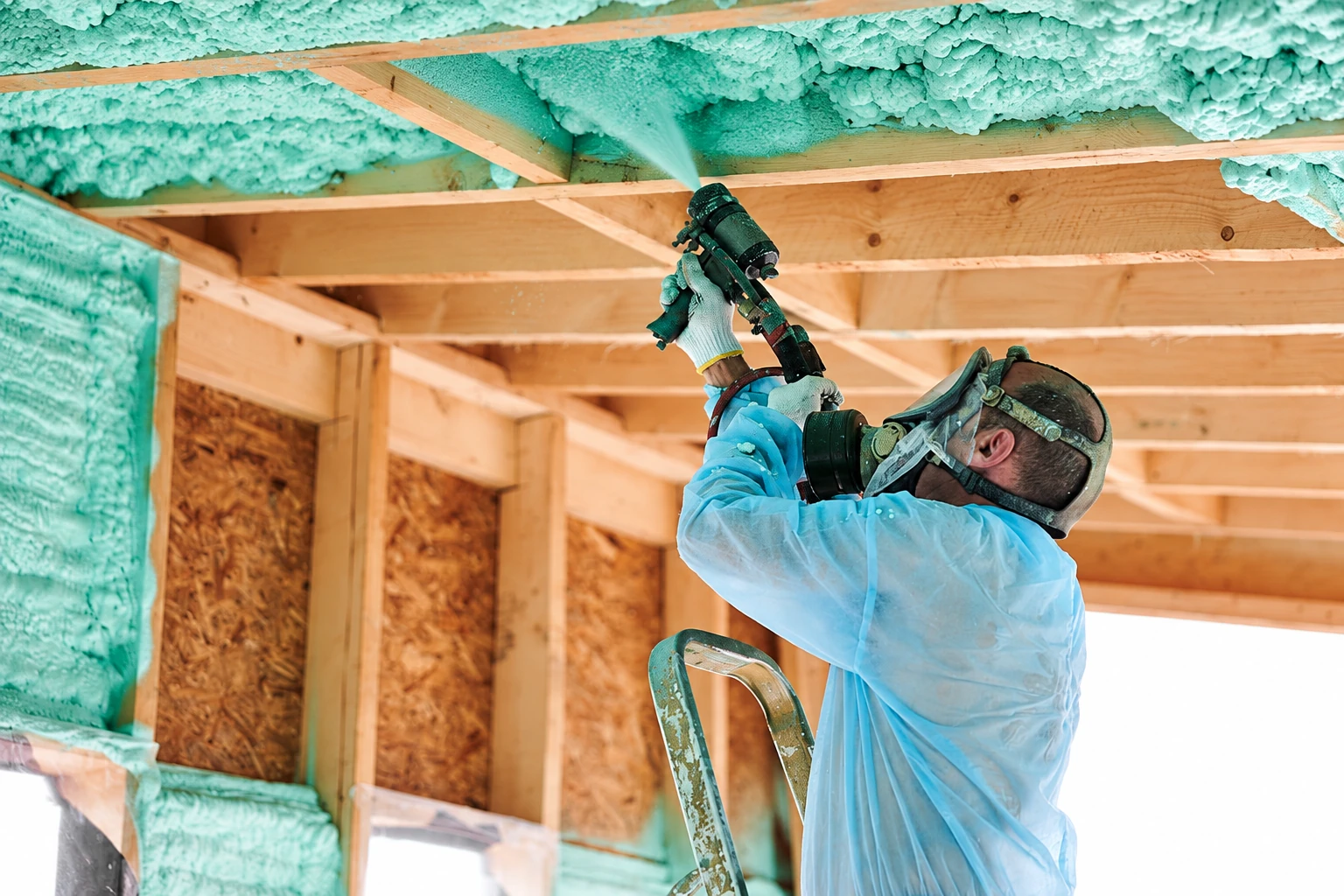
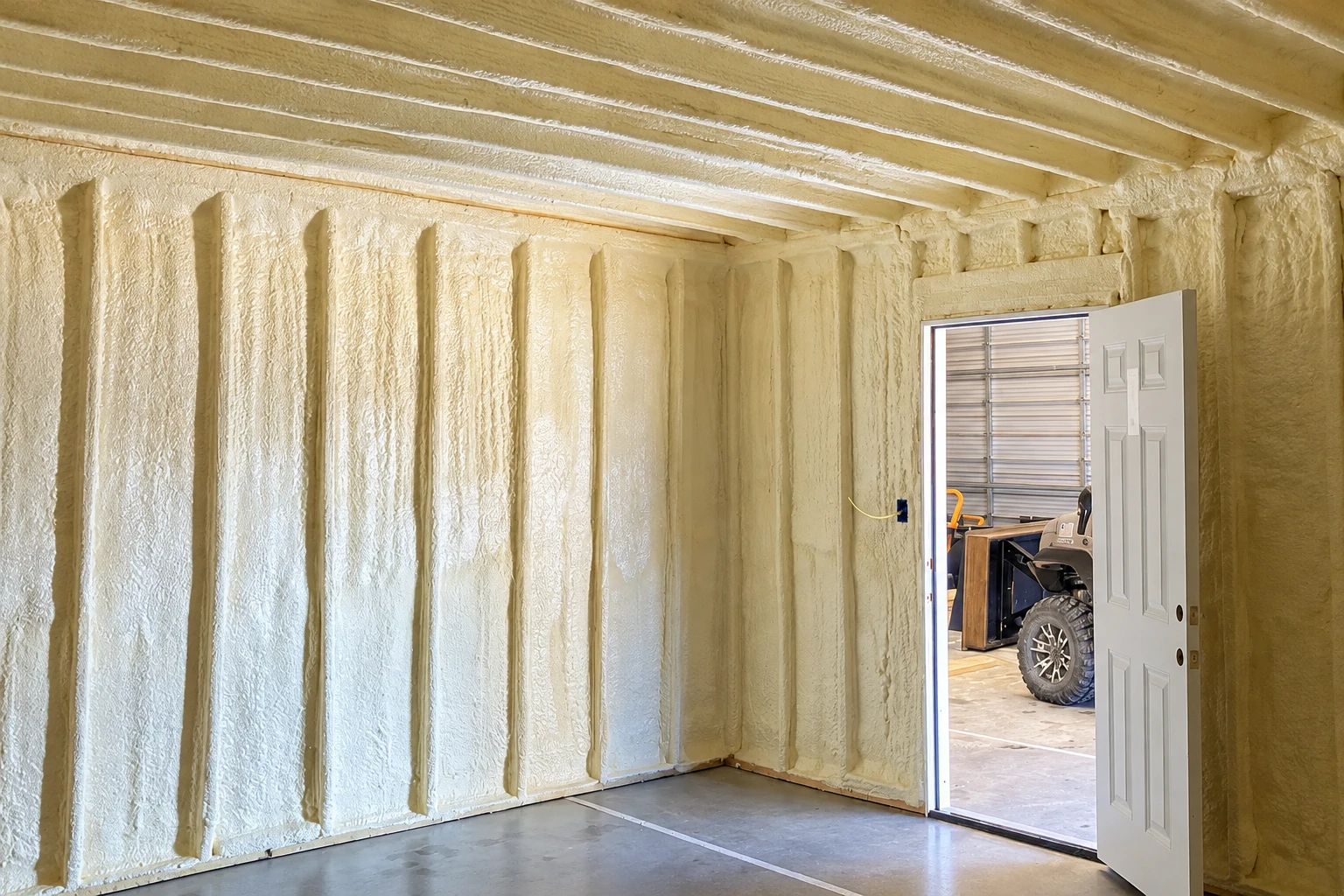
Before anything gets sprayed, I look at what's already there. If old insulation was soaked or full of droppings, or there's a leak another trade should fix first, I'd rather tell you and wait than foam over it. Doing the work in the right order is most of this job, because a problem we cover up is still there, just harder to see.
Closed-cell foam is rigid and handles vapor on its own, so we don't add a second vapor layer on the inside of it. The foam already blocks vapor on its outer side, and the spray foam guide says an extra layer inside has to be left out, because two layers can trap moisture between them.
While we spray, we shut down the heating and cooling in the work area and seal off its openings. EPA guidance calls for that step so nothing from the spraying travels through the ducts to the rest of your house.
Closed-cell isn't the only foam we spray. Open-cell foam insulation is softer and lighter and needs a thicker layer to stop air, so it fits some walls and rooflines better, and I'll tell you if that's your case. We also handle commercial insulation for shops and business buildings, where the same questions about air, moisture and time away come up.